

Understanding roof anatomy makes every decision easier—repair, replacement, or comparing prices. This plain‑English guide explains each part of a typical Sydney roof and what to watch for in our climate (southerly busters, coastal salt air, Inner West leaf litter).
RoofHero is Sydney’s AI‑powered roofing marketplace. We scope your roof remotely from aerial imagery and your brief, then vetted local roofers submit blind offers. You compare price, inclusions, timelines and warranties with confidence.
Sydney homes commonly use concrete or terracotta tiles or metal sheets (often Colorbond® steel). Tiles are modular and heavier; individual tiles can be replaced. Metal is lighter, comes in long sheets with fewer joints, and excels at shedding heavy rain.
What to watch for in Sydney:
For full replacements, see Metal Roofing (/services/metal-roofing) and Roof Replacement (/services/roof-replacement).
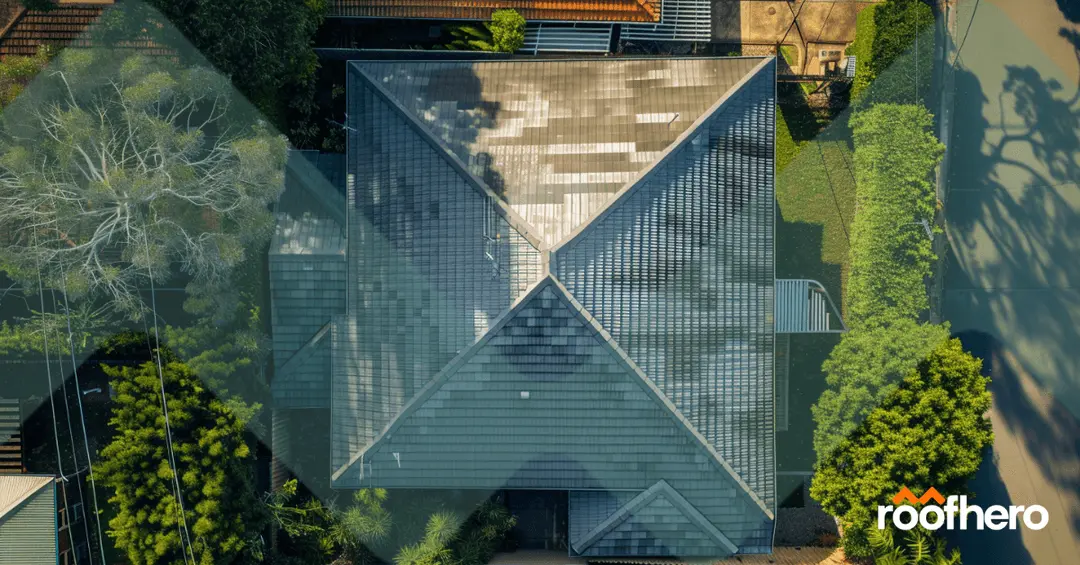
The ridge is the topmost horizontal line; hips are the sloping edges where roof planes meet. These lines are sealed with ridge capping (mortar‑set on tiles or purpose‑made metal cappings on sheet roofs). Cracked mortar or loose cappings are common leak points.
Valley flashings are wide, folded metal trays that channel roof water. Debris build‑up is the enemy—check after storms and during jacaranda/plane‑tree drop. Rust, pinholes or lifted edges are signs it’s time to repair or replace the valley.
Gutters collect stormwater; downpipes carry it to the ground or a tank. Correct fall, sufficient downpipes and clear outlets prevent overflows. Sydney’s short, intense downpours demand well‑sized drainage. Consider leaf guards if you’re under gums or planes. Replace visibly sagging, rusted or leaking sections promptly.
Related help: Roof Repair (/services/roof-repair).
Flashings seal around chimneys, skylights, walls and abutments. On metal roofs, flashings and matching counter‑flashings are critical. On tiled roofs, apron and side flashings integrate with tiles. Any gap, crack or lifting edge can leak in wind‑driven rain—common during Sydney storms.
Sarking (also called roof underlay or membrane) sits under cladding. It helps shed wind‑driven rain, reduces dust ingress and supports condensation control. Pair with bulk insulation to improve comfort. If you’re replacing the roof, it’s a prime time to upgrade both.
Signs of trouble: timber decay, termite damage, or noticeable sagging. Structural repairs should be handled by licensed builders/roofers.
Every penetration needs a matched flashing kit and sound sealant.
If you spot issues, a targeted roof repair (/services/roof-repair) can often add years of life. If problems are widespread—or the roof is near end‑of‑life—consider a roof replacement (/services/roof-replacement) for a clean slate and better energy performance across Sydney homes (/areas/sydney).
Get My Price — remote roof pricing from vetted local roofers.
For metal re‑roofs or tile‑to‑metal conversions, see Metal Roofing (/services/metal-roofing).
What’s the difference between a ridge and a hip?
The ridge is the top horizontal line of the roof. Hips are the sloping edges where roof planes meet. Both are sealed with ridge/hip capping.
What is sarking and do I need it?
Sarking is a membrane under the cladding that helps shed wind‑driven rain, reduces dust and supports condensation control. If you’re replacing your roof, it’s smart to include or upgrade sarking.
How do I keep valleys and gutters from overflowing?
Size them correctly, keep them clear, ensure gutters have fall to outlets, and add extra downpipes or leaf guards where trees overhang. Check after storms and during heavy leaf drop.
What’s the role of fascia and bargeboards?
Fascia supports the gutter and finishes the roof edge. Bargeboards finish the sloping edges on gable roofs and protect timber ends. Damaged boards can cause gutter sag and leaks.
Which parts usually get replaced during a re‑roof?
Typically: cladding, sarking, battens (as needed), flashings, ridge/hip cappings, and often gutters/downpipes. Structural members are repaired or replaced only if damaged.

Compare 3 competitive quotes without leaving your couch.